
For your child's hearing, take the time. Get it right.
When you're worried about your child's hearing, you want a clinician who knows how to talk to children. One who has the right equipment for small ears, and the patience for a five-year-old who isn't sure what's going on.
We see babies, toddlers, school-age children, and teenagers. Every assessment is calibrated to the child's age, attention span, and developmental stage.

Signs your child's hearing
might need checking
Not responding to their name or to loud sounds
Late speech development or unclear speech
Asking for things to be repeated, or saying "what" frequently
Watching faces intently to follow conversation
Trouble at school that wasn't there before, or difficulty following instructions
Turning the TV or tablet volume up high
Frequent ear infections, or ongoing complaints of ear pain
School, GP, or public health nurse has flagged a concern
If any of those are part of your day, it's worth a hearing check. Catching things early matters.

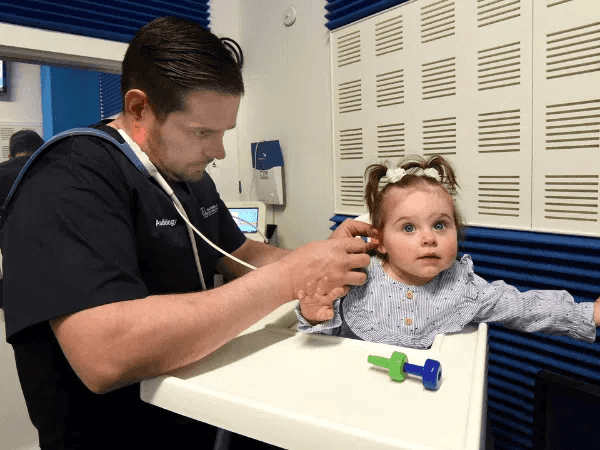
How we test children of different ages
Children's hearing tests look very different from adult tests, and they look very different from each other depending on the child's age.
Babies and infants (under 6 months): we use otoacoustic emissions and tympanometry, which don't require the baby to respond actively
Toddlers (6 months to 2.5 years): visual reinforcement audiometry, where sounds are paired with rewarding visual cues so we can see the child responding
Pre-school (2.5 to 5 years): play audiometry, where the child performs a small task (putting a peg in a board, dropping a block in a bucket) when they hear a sound
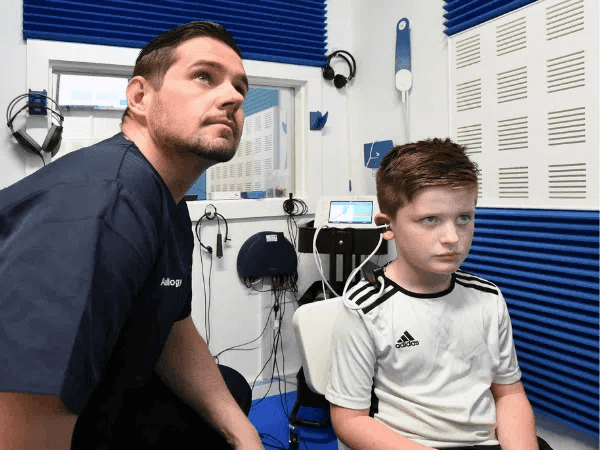
School-age and teenagers: standard pure-tone audiometry, similar to an adult test
Preparing for Your Child’s Appointment
We want every visit to feel comfortable and reassuring for both children and parents. A little preparation beforehand can help your child feel at ease and allow our audiologists to get the most accurate picture of their hearing.
Appointments typically take around 45–60 minutes, depending on your child’s age and the type of assessment required. There’s no special preparation needed, but we recommend talking positively about the visit and letting younger children know they’ll be taking part in some simple listening games and activities.
If available, please bring along any previous hearing test results, relevant medical information or referral letters. For younger children, a favourite toy or comfort item can also help them feel relaxed. Where possible, choosing an appointment time that works around naps and mealtimes can make the experience easier too.
Some assessments, particularly those involving babies and younger children, may require two audiologists. This allows us to keep your child comfortable and engaged while carrying out the assessment effectively.
Once the assessment is complete, your audiologist will talk you through the results, explain what they mean and answer any questions you may have. If further testing, monitoring or support is recommended, we'll clearly explain the next steps.
Ready to book your child’s hearing assessment?
What we look for
In children, the most common hearing issues are:
Glue ear (otitis media with effusion), which is very common in pre-school children and often resolves on its own
Conductive hearing loss caused by ear infections or fluid
Wax build-up
Sensorineural hearing loss (less common, but important to identify early)
Auditory processing differences
If we find something, we'll talk you through what it means, what the options are, and whether anything needs onward referral.
Working with schools, GPs, and ENT
If your child has been referred by school, your GP, or an ENT consultant, we'll send a full report back to them after the assessment. We work alongside their existing care, not in place of it.
My child has just failed a school hearing screening. What now?
School screenings are useful but they're a first filter, not a diagnosis. A failed screening usually just means a proper assessment is the next step. We can usually see your child within a week.
My toddler won't sit still for any test. Can you still help?
Will my child need hearing aids?
Does the test hurt?
How long does a paediatric appointment take?