
If your ears won't stop ringing,
you don't have to live with it.
For a lot of people, tinnitus feels like a life sentence. They've been told there's nothing that can be done. That they'll just have to "get used to it."
That's not the whole truth. The advice that nothing can be done is out of date. There is no cure, but there is real, evidence-based treatment, and it can make a significant difference.
What tinnitus actually is
Tinnitus is the experience of hearing sound when there's no external source. People describe it as:
Ringing
Buzzing
Hissing
Whistling
Pulsing or whooshing in time with your heartbeat
Roaring or rushing
It can be in one ear, both ears, or feel like it's inside your head. It can be constant or come and go. It can be quiet enough to be barely noticed, or loud enough to disrupt sleep, work, and relationships.
About 15% of people in Ireland experience some form of tinnitus. You're not alone, and you're not imagining it.
What causes it
Tinnitus isn't a disease. It's a symptom, and the underlying causes are varied:
Hearing loss (the most common cause by a wide margin)
Exposure to loud noise (music, machinery, gunfire)
Ear infections or wax build-up
Some medications
Stress and anxiety (which often make it worse)
Head or neck injuries
Sometimes, no identifiable cause
Identifying the underlying cause is the first job of any tinnitus assessment. Treating the tinnitus often starts with treating what's behind it.
How we treat tinnitus
There's no single treatment that works for everyone. The right path depends on your tinnitus, your hearing, and how the tinnitus is affecting your life. We combine several approaches.
Comprehensive tinnitus assessment
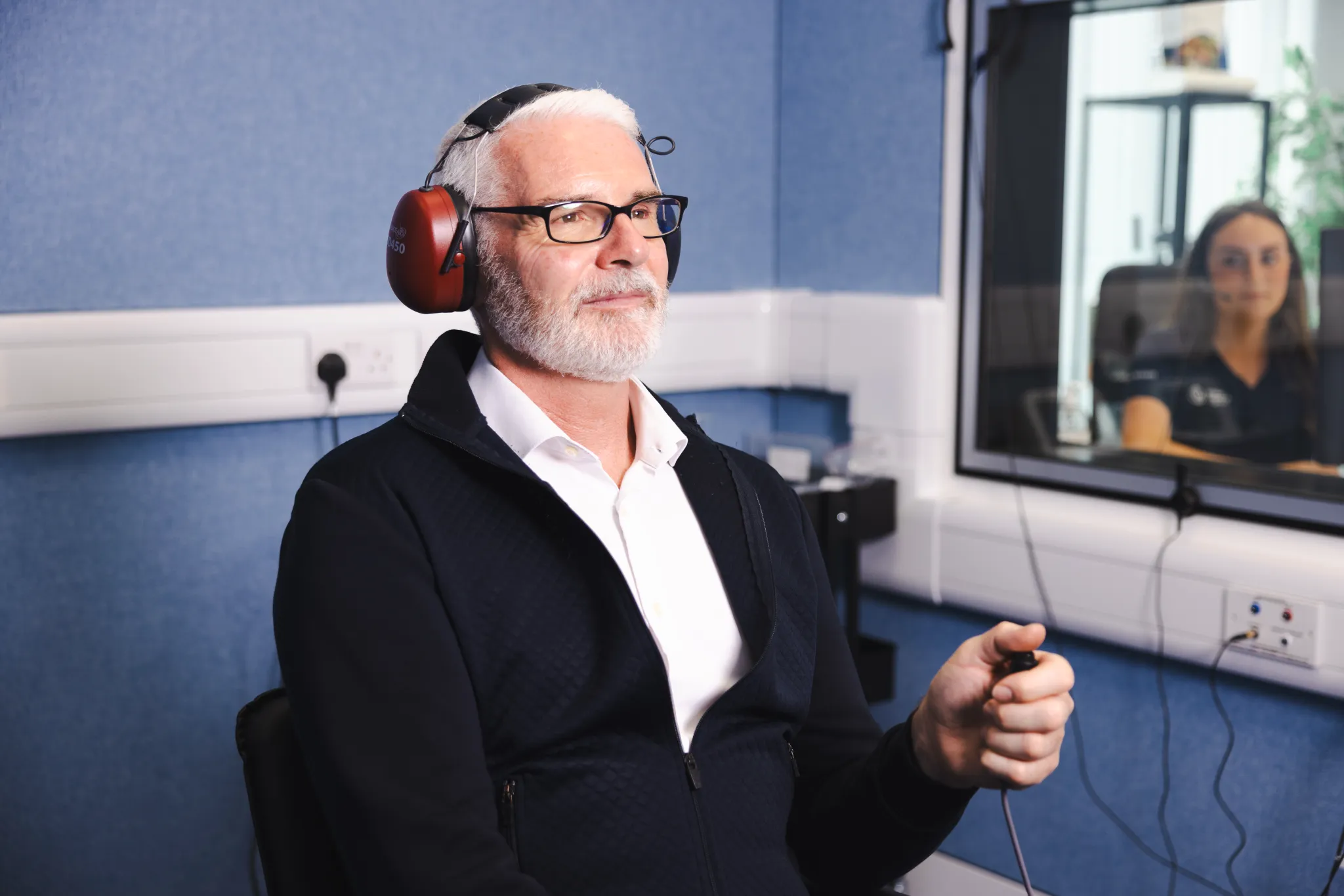
Your first appointment is a full assessment: a detailed conversation about your tinnitus (when it started, what it sounds like, what makes it better or worse, how it's affecting you), a full hearing test, and tinnitus-specific measurements. From this we build a clear picture of what's going on.
Sound therapy
Carefully chosen background sound can help the brain learn to filter tinnitus out. This isn't masking the sound forever, it's gentle retraining. We'll work with you to find the right sound, the right level, and the right timing.
Counselling and coping strategies
How you relate to tinnitus changes how loud it feels. Cognitive techniques, relaxation training, and sometimes referral for CBT can change the experience of tinnitus even when the underlying sound doesn't change.
Hearing aids
For people with both hearing loss and tinnitus (the majority of cases), well-fitted hearing aids alone can significantly reduce tinnitus perception by re-introducing the ambient sound the brain is missing. For some patients, this is the only intervention needed.

Is tinnitus curable?
No, there's no cure that switches tinnitus off. But it's very treatable. The majority of patients who go through a proper treatment programme experience meaningful reduction in either how loud the tinnitus feels or how much it bothers them. For many, both.
Will my tinnitus get worse over time?
Should I worry that something serious is causing it?